Series: Moses: A Journey From Bondage to Freedom
Suffering and Perseverance
September 27, 2026 | Peter Rowan
Passage: Exodus 5:15-6:13
Summary
Suffering is one of the most honest and difficult realities the Bible addresses, and Exodus 4 and 5 bring that honesty into sharp focus. From personal grief and relational loss to the systemic oppression of an entire people, Scripture does not sugarcoat pain. It names it, describes it, and takes it seriously. When Moses faces confusion and despair, he does not simply try to make sense of things on his own. He turns to God with his questions, and God responds with a series of promises beginning with the words 'I will.' What makes Christianity unique is not that it explains away suffering, but that it shows us a God who enters into it fully, all the way to the cross. The empty tomb is His promise that He will bring His people through it as well.
Transcript
Lord, we're thankful for your word and for the variety of your word, for the great breadth of it and the depth of it. Lord, we're thankful for the book of Exodus that we're in now. Considering these events in the life of Moses and your people, Israel. God, some of them are so familiar to us. Some of them we just think of as fairy tales long ago written down of a people so far away from us.
Maybe these things happened, maybe they didn't. We think, God, I pray that they would be for us your true and living word, that the reality of their truth would penetrate our hearts even today, bring it close to us by the power of your Holy Spirit. Would we know that these. These events are for the good of your people, for the blessing of your church? Would we again hide your word in our hearts?
We wouldn't sin against you, but would delight in you. So now, Lord, would the words of my mouth and the meditations of our hearts be pleasing in your sight, O Lord, our rock and our redeemer. Amen.
All right, I want to start with this idea that the Bible tells it like it is. The Bible tells it like it is. I've shared with you over the years some of the reasons why I'm a Christian. And to be honest, what I've said is one of the reasons I'm a Christian is because I was born into a family that follows Jesus. And I think that's just good to acknowledge that likely, if I was born in Saudi Arabia, I might not be following Jesus in the same way.
There's just sort of social kind of dynamics of why maybe I'm a Christian, but there's many other reasons. My faith has been tested here and there. I've had lots of good friends who haven't followed Jesus and think it's sort of foolishness. I've had conversations and I've found those arguments sort of wanting, you know, insufficient. And I continue to follow Jesus.
I've shared with you over the years, probably a number of times that one of the reasons why I'm a Christian, why I follow Jesus, is because the world is both unbelievably beautiful and tragically broken. And that's to be expected. If the world, if a good God made this world and he made humankind in his image, we should expect to look upon it and see it's good. Not just to look out and say, yuck, right? But also if sin is real, if the Bible actually says that sin is a real thing, that we should also go, ah, things are not as they should be.
You have to hold those two things together. And the Bible doesn't shirk back from either of those truths. It gives us some answers for them. But another reason I'm a Christian is because of the Bible itself.
And I know that there are many people that actually doubt Christian faith or don't believe in Jesus because they look at the Bible and they say, ah, what about this and this and this? And we're actually going to address, I think, a couple of those questions even in this series. But one of the reasons why I believe in the Christian message and follow Jesus is actually because of the Bible. And partly it's because I think the Bible tells it as it is, tells it like it is.
It's hard. One thing you cannot sort of say once you really start diving into the Bible is that it's just some superficial kind of sentimental religious text to make you feel good. That's just not the case. You can't take that approach once you start studying it. The Bible tells it like it is.
And some of this telling it like it is is actually addressing the reality of human suffering, which may seem odd, but one of the reasons I think actually Christianity commits itself is even the fact of how the Bible engages with suffering. It doesn't push it to the side. And again, I know that maybe as we talk about suffering, maybe that's one of the reasons why you're like, yeah, that's, that's why I don't know if I can buy it. I don't know if I can buy it.
As one Rob said that I read this is personal. I won't believe in a God who allows suffering even if he, she or it exists. Maybe God exists, maybe not. But if he does, he can't be trusted, right? And that's what plenty of people would say.
Maybe suffering is your reason for not engaging with the Christian message. But actually I think one of the things that commends Christianity is the Bible and how it says it like it is, tells it like it is, even with regards to suffering, suffering at all. So one of the things that the Bible does is it shows us lots of different kinds of suffering. And I think we can break them down. I think actually our text itself, now I'm going to be considering like most of chapter five with this, but our text itself in a way, I think addresses these different kind of broad categories of suffering, of individual suffering and communal, or maybe you could say systematic or systemic suffering.
And so I kind of want to look first at some of this individual suffering and then sort of the systemic suffering. And then I want to kind of come back to this question of why do I think that we can actually have greater confidence in the Bible, okay. And the greater confidence in the Christian message. So first, when we come to this passage, you know what we've done. So the last couple weeks, we've been with Moses at the burning bush, right?
And last week we ended with Moses going to Jethro and saying, hey, please let me go. And I want to say that actually, even in that initial kind of interaction right after the burning bush, what we find actually is sort of a deep individual emotional suffering sort of mentioned for us. Moses goes to his father Jethro. This is what he says, please let me go back to my people in Egypt to see if they're still alive. And of course, this is a courteous thing to do.
He's honoring his father in law in this dynamic, asking for his blessing, which he gives him. But I want you to also think about this. He mentions that he wants to go back to his people to see if they're alive. And he's also leaving the comfort of this man, that all we know at this point is that he's caring. And actually what we learn later on in the story, later in Exodus, is he's also wise.
And so Moses has lived these 40 years under the care, under the gentleness and the wisdom of this man. He says, I need to actually leave this. So he's leaving somebody that has been loving towards him, caring towards him. And there's this emotional suffering, unquestionably, that Moses is experiencing in this relational kind of break that happens here for a little while. And I think this just actually speaks in some ways right to this reality.
It's not shirking off the dynamics of interpersonal stuff. He actually names the suffering of his people. He says, I don't even know if they're still alive. He is experiencing emotional suffering, wondering about his people, but also leaving this care and this love and this wisdom. I also think that there's, oddly enough, and I'm not going to get into this too much, but this is a passage I felt like I couldn't just gloss over.
There's also a suffering that's mentioned actually in the middle of the end of chapter four, that sort of has to do with the disobedience of Moses towards God. You can imagine why I might want to gloss over this little passage. But what happens is that Moses is with his family, his wife Zipporah and their son Gershon, who had mentioned earlier and they're lodging, it says they're lodging on their way back to Egypt. And it says actually that the Lord sought to put him to death and then his wife circumcises him. Right?
And this is complicated thing about circumcision, which I'm not going to get into all that right now. But what happens is that the wife, it's twice says, you're a husband of blood, you're a bridegroom of blood. To me that there's this interpersonal dynamic of suffering that happens here because Moses actually isn't following the covenant of God. So there's different kinds of suffering.
But another thing, actually, I think that's mentioned kind of significantly, and this happens more as we get into chapter five and sort of at the end of chapter four, is that there's a suffering that's mentioned here, an individual suffering that's mentioned. And you might know this dynamic. It's that you've tasted something good and then that something is taken from you. So Moses and Aaron, what happens, right, is that they show up, they are obedient to the Lord. He tells them to go, and I'll speak to you, say these things, do these signs, and they go and they show up, and they show up to the elders of the people of Israel, and they say the things and they do the signs.
And it says, the end of chapter four. And the people believed, which is the exact same thing that Moses said. Well, God initially said, they'll believe you. Then Moses said, they won't believe me. And then it says, ah, they believed, you know, something good was given to Moses.
Very thing that Moses had feared wouldn't happen came about. And I can imagine Moses was like, wow, okay, this is great. God's really with me. Not only is he with him, but the people, the leaders of the Israelites are now with me. He wasn't alone.
It wasn't just with Aaron. But now he's got this whole group of people.
And then, of course, as we continue on through the story, the people kind of turn against him, right? The joy that was once his is now taken from him. And again, I think this is kind of this individual sort of suffering that we oftentimes go through. Something good and right and beautiful seems to be reversed.
Think of a lot of examples of how this has happened in the life of our own body. Something good has been given to us only to seemingly be taken away or truly be taken away. Many of us have experienced the joy of learning that we're going to have a child only to have that child die in the womb. Our last house we bought from an elderly woman who outlived both of her children. She was 82, and she was selling the house because her daughter, who was 60, had died of cancer.
Something beautiful given and taken from her unbelievable sorrow.
Of course, many in our church, as we have, many folk who are older have lived decades maybe, with their best friend, and they've put them in the grave now. They've lived a life of mourning and loss and learning to live without that one alongside of them. And much of suffering in this life actually has this dynamic, right? Something good. Wow.
God, look at this. Then the reversal. There's also suffering here in this text, in these stories here of the rejection of God. Not our rejection of God, but people's rejection of God. So Moses finally comes to Pharaoh.
He finally makes it to Pharaoh, as we've been in these last few weeks, hearing God tell him to go.
And he had this great experience of the leaders of the Israelites responding well. And maybe he's like, I'm on a roll. Well, I'm going to go tell Pharaoh. Thus says the Lord, the God of Israel, let my people go that they may hold a feast to me in the wilderness. That's Pharaoh's response.
Who's the Lord? Who's the Lord, that I should obey his voice and let Israel go? I don't know the Lord. And moreover, I. I won't let Israel go.
Moses, a little shrewd in his answer. In his answer, maybe he's like the wise apologist. He knows how to interact with the pharaoh. He says, please let us go. He's first, respectful, begging a little bit, but with respect.
Then he says for three days, which God actually hadn't necessarily commanded. But he's like, you know, I'll make this easier on Pharaoh. So maybe it's a little more palatable. Let's give it three days time.
And then he kind of works Pharaoh by saying, you know what? You don't want a dead population. You don't want dead slaves. And maybe this God's going to get mad, and by pestilence or the sword, they're all going to die. So he's kind of working with him, trying to win him over, but he's rejected, and he rejects God, right, Because I don't know this Lord.
So part of what I want you to hear is that there's a suffering that we experience as Christians and the rejection of God. Who is this Lord? Why should I obey him? And some of the probably the suffering you experience is the scorn. The scorn of following Jesus, who's the Lord, who's Jesus?
Or as Paul says right in First Corinthians, it's foolishness to the Greeks.
You devote time on your Sunday morning instead of going and grabbing brunch, to gathering together, to sing songs, to eat bread and wine, to celebrate the idea that God would come among us, that he would die on a cross. That's foolishness.
In my own time reading the Bible, I've been reading through some of Ezekiel. He suffers a great deal not just because people outside of the church reject God's message, but because the people inside the church reject it. There's a suffering that we experience in this life by being faithful to God, rejected by others. But part of what I want to say is that this life as individuals is full of intense suffering. It's all kinds of different kinds of suffering in this life.
And what it often does sort of make most of us ask or say is, I don't need this. I don't need this. I just want to hang out and eat cake, right?
All this kind of suffering can cause us to ask, can I keep taking this?
Can I keep going? And of course, what happens is that for many people, you say, no, no, I can't. I can't keep going. I can't keep taking this. This is too much.
This speaks to this individual suffering. And I know this is why so many people don't buy the Christian message. Because we live in this world that is full of all kinds of different suffering. I just named a few, but we could go on and on. So all kinds of different suffering.
And the response often is, no, I can't keep taking this. I don't want to follow this Lord anymore, or I reject your God.
But this passage, as much as it speaks to some individual dynamics, it's mostly actually about sort of systemic suffering. It's mostly about the suffering of the people of God as a whole. Of course, suffering here as systemic suffering often is, is the power dynamic, the power of Pharaoh, the power of Egypt, and the possibility that they might lose some of that power, right? That's how often systemic suffering exists. So when Pharaoh says in chapter five, verse two, he says, who is the Lord?
That I should obey his voice? He himself is actually speaking as a God, right? Pharaoh is considered a God in Egypt, but he's also functioning like a God. You can't take away my control. I demand the power.
I demand the say unbelief in the Lord. For Pharaoh was belief in himself just like unbelief in the Lord, often for us is actually belief in ourself, our own abilities, our own mental capacities and all the rest. But the suffering here in this passage is because if Pharaoh were to go along with this, if he were to give up some of his power, it would disrupt the religious life, the social life, the economic life, the political life of Egypt. And Pharaoh had to grab control. He had to keep the status quo of sin, whether it meant the suffering of a whole population or not.
And I want us to sort of stop and just say. And also see that this is how abusers often work, whether it's systemic abusers or sort of individualized abusers, okay, you want to preserve the status quo, you want to preserve power, you want to protect the system. So two things I want us to see here under this idea of systemic suffering, and this is that there's the demand for control, control and exploitation. So first they control. And this is kind of getting into more of chapter five here.
What happens first that you control by tightening. So the taskmasters and the foreman of this is kind of actually funny. If you read it through, you're like, which taskmasters are what? But. But when it's the Israelite ones, it always says the taskmasters of the people of Israel.
Okay, so just give you that. But the taskmasters and the foreman of Pharaoh, they go out to the people. Verses 10, 11, and it's this. Thus says Pharaoh, I will not give you straw. Go and get your straw for yourself, wherever you can find it.
But your work will not be reduced in the least. It's tightening. It's tightening, tightening control. Verse 6, actually of the same chapter, said it was that very day when Moses went out. Pharaoh says, his reaction to Moses coming and saying, hey, you got to let my people go, is he says, no, I'm going to tighten the control here.
So Pharaoh's protecting the system by tightening it. But then also what he does, and this is also common to see, attacks. He attacks. So he controls by tightening and controls by attacking. So if you look at the paragraph that began, and actually our reading this morning, it starts in verse 15.
The taskmasters of the people of Israel, they come to Pharaoh and they say, why do you treat your servants like this? No straw is given to your servants. Yet they say to us, make bricks and behold, your servants are beaten. But the faults on your own people. What does he say?
Yeah, they shouldn't be you. No, he says, you're lazy. So he repeats it. You are idle. You are idle.
That's what you are. He Attacks, tightening and attacking. And so much abuse takes on these forms. And we need to watch for it. We need to watch for it systemically.
We need to watch for it in abusive relationships, frankly. We need to watch for it in our own selves. Is our impulse to tighten, to attack, to attack, to lash out. Because we can be little pharaohs, our powers are threatened. And so we do the same thing, tightening and attacking.
You feel the pressure at work, the stress of financial strain. And we enter back into our family lives demanding that somebody listen to us because nobody else seems to be attacking and controlling. Maybe being quick to attack friends for not showing up as we think they should, you know, trying to control some aspect of our life, attacking and controlling. But beyond this dynamic that is so prevalent in our world is that there's also this exploitation, okay? And this is what you most often think of when you think of systemic suffering exploitation.
And there's a few things that happen here which is again, is also kind of is mirrored in most exploitation. And the first thing is that exploitation begins with diminished personhood or sort of a diminishing of who people really are. A wrong view of personhood. So Moses comes to Pharaoh and he's speaking for God. And, and what he says is, God said, let my people go.
Which is to say he's defining the Israelites around who he is him. And, and what Pharaoh says is, he says, ah, the people, those people, ah, the Israelites. He doesn't respond with, I won't let your people go. He's like, ah, they're just, they're not God people, they're people.
And the moment you define any human without connection to God, you kind of do anything with them. When you diminish personhood, when you misidentify people outside of their relation to being God imaged bearers, right? People that actually reflect the very reality of God, they just become instruments. They become instruments, but they become vehicles for your agenda or they become obstacles to your agenda. Which is to say you can do with them what you will, or you can trash them as you will.
You can say whatever you want about them. You can do anything you want with them. This is the beginning of systemic suffering. And it marks systemic suffering. Think of the transatlantic slave trade, right?
This slave's being called property. You do with them what you will for your objectives or do away with them as you will, as they're inconvenient. But the Native Americans here in this land, being called savages, you diminish their personhood as related to God. Do with them what you will. People with disabilities in Nazi Germany being called life, unworthy of life, do with them what you will.
Or unborn babies in their mother wombs being called pregnancy tissue exploitation often begins with divorcing personhood from being those who bear the very image of God. And the moment you do this with any human, like any human being, followers of Jesus or not, the moment you take away this idea that they are image bearers of God, you can exploit them to your purposes, you can use them for your gains. They can be vehicles for your agenda or obstacles to your agenda. What I'm saying is exploitation begins with this misidentification of personhood. And it's just what marks exploitation.
It marked it there and it marks it in our own day. But exploitation is also related to the idea of what humanity is for, which is to say the purpose of humanity. What are people for?
Maybe you'll think about this. What does Moses first say? He says, please let my people go, that they may worship me. What does Pharaoh say? They are for work, not for worship.
They're for productivity. They're for what I can gain from them, for what I can take out of them. They're for my purposes. Pharaoh says, I'm not going to let them worship. They're to work.
And now they're to work harder.
Which again, you're going to treat somebody totally differently. If you see that every single person, every single person is made in the very image of God, every human being is made in the image of God. That will check how you speak to them, check how you treat them with your body, you treat them with your words, but also as you think of not just their personhood, but their purpose. That changes it too. If they're all about work, then what can you do for me is the main question.
What can I get out of you is the main question. If they're for worship, totally changes how you treat them. And according to the Bible, our primary purpose, by the way, and part of this is related to work. But our primary purpose is worship. Our primary purpose, that we live our life before God and for Him.
We offer all of it up to him, our work included, but as worship.
The third thing that we engage with here that is again related to exploitation is the dynamic of power.
Of course, this is massively prevalent here. What's the Pharaoh say? Who's this Lord he speak of?
He's saying, I'm the one who dictates what happens here. And he's all about preserving his power. He tightens and attacks to preserve his power. He Demands write their personhood to preserve his power.
He sort of re narrates their purpose for his power. And again, watch for these. As soon as there's a power grab, there's often a dynamic of exploitation.
Watch for these marks of systemic suffering. They are marks that have taken whole populations and put them under the cruel hand of those with power. And it's happened again and again and again. It still happens today. Whole human populations used as vehicles for a certain agenda or obstacles for a certain agenda.
What I'm saying here is that the Bible presents these different things. Suffering on an individual level, suffering on a whole systemic level.
Suffering because we've tasted something good only to have it taken from us. Suffering because of the rejection of God. A suffering that's marked by control, right? Attacking, tightening, Suffering that's marked by exploitation, diminishment of personhood, a distorted purpose, a demand for power. This is so much of the suffering of our world.
But here's in some ways to kind of get back to where I started, which is that the Bible tells it as it is.
The question for us is, what do we do with this? Because all of us experience different individual suffering. Many people experience systemic suffering throughout the world. What do we do with a world like this? What do we do with the great question of suffering?
Where do we go with it? And I think this text actually invites us into two options.
One, you take it to what is. Let me try to explain this a little bit. The first option is just the world with what is. What's right in front of you, okay? The natural world.
So first the Israelites, in their suffering, they go to Pharaoh. That's what they first do. He's the one in control. Let me just go to this person. And it's not.
I don't want to diminish the idea that we should actually go to those in power and actually challenge them and speak against their abuse of power. But when they go to Pharaoh, what he does is he does this tightening and attacking that I was talking about. So in their suffering, they go to the humans around them. And the people with power want to attack. Their impulse is going to be to tighten and attack.
That's what happens. And then often what we do as we receive, that is actually we live out of it, right? And so the Israelites that go to Pharaoh, they leave and they find Moses and Aaron, it says, are waiting outside for them after they had gone to Pharaoh. And what they do is actually they do the same thing to Moses and Aaron. They attack Moses and Aaron, right?
So if we're just living on the horizontal level of what is right in front of us. A lot of times we receive tightening and tacking, and we go right back out and we do it. That's what they do. They say to Moses, Aaron, the Lord be judge over you, right? So they attack back.
I think there's another human option, sort of like with just the way the world is, that sort of doesn't seem sufficient in our suffering. We think that God cannot exist because of our suffering, because we cannot see the reason for it, right? But it's this horizontal thing. It's just the world that is kind of right in front of us. We cannot see a reason for it until we say, God must not have one.
It doesn't make sense to us. Maybe occasionally we can see that some good comes out of some suffering. Maybe you lose a job, as a good friend of mine back in Washington recently did, and I was talking to him about it, and he said, you know, I think it's actually the best for me because I've wanted to go out and start my own thing. And now I'm forced to sort of an immediate, okay, there's some good in this.
Maybe there's a marriage. I mean, Jesus in that passage in Matthew 19 doesn't diminish the difficulty of marriage. He actually says it was because of the hardness of your heart that the Lord gives you this as an option sometimes. Because some marriages actually do reflect this sort of abusive dynamic of tightening. You know, the control is so much there, the exploitation is so much there, that actually the right thing to do is to say, I need to step out of this, be out of it.
And you know that there's a good that comes out of suffering. That happens sometimes. But often what we're doing when we're looking at our suffering and we're demanding sort of a reason for it, is what we're saying is all that can exist is what I can understand of it. What is, of course, what this does is it makes us to be like Pharaoh, a God, right? Because it demands massive faith in our own sort of cognitive ability.
If we can't make sense of it, then it must not be right.
And then another way of looking at the world that I think is insufficient is by saying that the only thing that gives meaning to the world is the world itself. So it's just the world that is.
We can look at the mechanisms of strictly naturalistic evolutionary theory in this regard. Okay? Natural selection depends upon death and destruction and violence of the strongest over the weakest. I Mean, that's the whole theory is that the strongest make it out the strongest of the ones that live. And you have to look at something outside of sort of the natural order of things to have something like justice for the weak, justice for the exploited, determine that suffering should stop, because suffering is the way of the world.
And if the world is just all that is, if all you can do is look at what is, then we don't really have a reason, in a way, for the anger in ourselves at systemic suffering or the suffering we experience. It's just the way of the world. So I think this text itself presents us with this. You have to just deal with what's right in front of you. And what you're going to be inclined to do is sort of attack as you've attacked, tighten as you tighten, or sort of look just immediately for an answer.
But also in our passage, actually, we have this other option. We have another option here, okay? And that's what Moses does. In verse 22 of chapter 5, Moses turns to the Lord. This is verse 22.
Then Moses turned to the Lord and said, oh, Lord, why have you done evil to this people? Why did you ever send me? You know, he's bringing it to God. He's even bringing his question to God, but he's bringing it to the Lord. I mean, that's the other option.
You kind of work with just the world it is, or you bring it to God. You bring it to him. And here's what happens when. When he brings it to the Lord, The Lord responds in some ways with this great I am that he is.
He speaks a lot to the future. He speaks some to the past. This is his first response. Now, but the verse 1:1 of chapter 6. But the Lord said to Moses, now you shall see what I will do to Pharaoh.
For with a strong hand he will send them out. And with a strong hand, he will drive them out of his land. And then the next few verses, he actually goes back. So he's saying, I will. So he's looking outside of just the immediate.
The what is right in front of you. He's going to the I will. And then in the next few years, he goes back, he says, I'm the God of Abraham and Isaac and Jacob. I have been. I've made this covenant of redemption, and I will make good on it.
And so he gets down to verse six, and I want you to listen to some of these I wills say, therefore to the people of Israel, I am the Lord. Remember, that's his covenant name. Yahweh. One who is, I am one who was, the one who will be. And I will bring you out from under the burdens of the Egyptians and I will deliver you from slavery to them.
And I will redeem you with an outstretched arm and with great acts of judgment will take you to be my people. And I will be your God. And you shall know that I am the Lord, your God who's brought you out of the from under the burdens of the Egyptians. I will bring you into the land that I swore. I will give it to you for possession.
You see how he's taking him out of this immediate, how he's saying, look beyond what just is right in front of you. I'm the God who was, who is, who will be.
Now I have to say, brothers and sisters, I do not have the answers to the particular suffering of the world. It would be absurd for me to say that I do. I don't know why all the suffering that we experience in the world happens. I do believe that suffering is an experience and the reality of a world that is in rejection and rebellion against God. It's an effect of living in a sinful world.
I can't give you all the answers for it, but what this text says is bring it to the Lord. And what the Lord says is, I will. I'm going to do something about this. None of this is lost on me. If we go back, if we go back to that end of chapter two that we have for our memory verse and God saw and he knew, he sees, he's doing something about it, nothing is lost on him.
God is not turning a blind eye to the suffering. The Bible gives us no room to turn a blind eye to individual suffering or to systemic suffering. The Bible doesn't brush it aside as though it's no thing.
It's honest about it.
But I think we can also say there was no Pharaoh, there's no Moses, right?
Without the suffering there in Egypt, we wouldn't have the great redemption story of the Old Testament. With no Jericho, there's no Joshua, with no Goliath or Saul, there's no David, with no Ahab or Jezebel, there's no Elijah. And even without no power grabbing religious leaders or Romans, in some ways there would be no Roman cross. There would not be Jesus hanging on the cross. In some ways we could say without no crucifixion, there would be no resurrection.
Somehow the stage of suffering in the world is the stage upon which the drama of God's redemption is played out.
Somehow the Stage of the suffering is where the drama of redemption is played out and it's played out again and again. But what the Christian message says is that we most see this in Jesus. We do. What the Christian message does is it doesn't give you an out to sort of turn a blind eye, like I said, to suffering, to diminish it, to say it's nothing. Christianity has no time for that.
But it constantly says, I will do something. And as Christians, we also say God has done something, which is to say that he's entered into it. He's not brushed and striped, right? The Bible isn't some text that kind of says, make nothing of this. And God is not a God who says, don't look there.
He makes much of it. He goes to the place of suffering.
And here's the truth. There's no other world than this world that is chock full of suffering. So everybody has to give an answer to it.
And I want to suggest to you that Christianity tells it like it is. It's honest about it. If we brush it aside, then we're deceiving ourselves, we're liars about the way the world is. Christianity never brushes it aside. The Bible doesn't brush it aside.
Jesus does not brush it aside.
Instead we have the cross and all that leads up to it. And what leads up to the cross. But attacking, right, tightening Roman exploitation, it's all right there in the Gospels as well. Power grabbing.
And yet God enters right into all of it.
I think part of our mistake, part of the mistake that the Israelites made and Moses to a degree, and countless Christians have made in a way, is to assume that what God is first and foremost concerned with is alleviating the suffering.
And he will do that.
But the main thing he desires of us is to go to him, is to rest in him, to rely on Him. I mean, if God is God, he really, why wouldn't we say that? He could have alleviated right away, other than that he desired them to trust him, to rely on him, to worship Him. I mean, he will do away with suffering. That's one of the great hopes of the Bible, right?
You get to the end of Revelation, so there's going to be no more crying or tears or pain anymore. But the lesson that seems to be learned again and again in the Bible is that the Lord says, come to me in it.
My strength is made powerful in your weakness.
Come to me. All who labor and are heavy laden. He wants us to go to Him.
His greatest interest is to demonstrate his power and his grace. We see that most clearly in the suffering of Jesus. The cross, the place where God goes to suffer himself. That's where we see his power and his grace post on display.
It's not just that God's power is made perfect in weakness, though of course that's true. But often God's power and his grace is most on display in suffering. And that's most true on the cross. Actually, God's grace and his power is most on display in his own suffering. And I think the thing again that commends Christianity more than anything else is that he doesn't just brush suffering aside, but he actually goes to the place of it.
There's no other God like this. There's no other message like this. You have to deal with suffering because it's the world that we live in. The Bible deals with it, but it says God is there. He goes to the place of suffering and he will bring us through it.
I will. I will. I will. This is the story, this is the story of the redemption in the Old Testament, but this is also the great story of redemption in the New Testament with Christ on the cross going to the place of suffering and bringing his people with him through it. This is the good news part of what I'm telling you.
This. I think this is good news because the Bible does not shirk it off.
Wouldn't it be a sad Bible if it didn't speak to these things? We would know it's a farce if it didn't. We would know it has very little to say to our lives if it didn't. That in itself is good news. But Christianity is even more commendable because it doesn't just speak to it, but it speaks to the God who enters into it.
He doesn't stand far off. He comes close and he goes to the place of suffering itself. It's through the cross that we find the empty tomb. And this is the way of our Lord and it's always also the way of his people.
We take up our cross and we follow him and he says, I will bring you through. Let me pray, Lord.
No doubt this is one of the great questions of religion, and not just religion, but the world. Because we live in a world that is chock full of suffering. We experience it on our individual levels, emotionally, physically. We experience spiritual suffering. We experience it communally, sometimes systemically, sometimes racially oriented, sometimes class oriented, but wide swathes of communal suffering.
God, we give you praise that you do not brush it off, but you promise that you will bring us through and you do so by becoming part of our story, going to the cross itself, taking on Satan, sin and death there, at the place of greatest agony, being buried in a tomb, but rising three days later, conquering Satan, sin and death. Where you are, you will also bring us that we will be with you. Lord God, I pray that this would sustain us as we wrestle, as we live in anguish, as we suffer in this life. Lord, would it push us to a greater dependence on you, a greater hope for heaven, a greater living by the Spirit, not having all the answers, but living in faith?
God, do this move in us in these ways. May we cling to the cross, the place where you yourself suffered, you yourself paid for sin, where you yourself took on the powers of this earth, believing that power meant total control. God, would we look to Jesus, the author and the perfecter of our faith, who, for the joy that was set before him, endured the cross, despising its shame? Would we find, in a way there is a joy that. That we learn how to grab onto you all the more not to turn to the things of this world, but to you?
Would we be like Moses, who then turned to the Lord, even in our questions? Would we find you the one who sustains us in our suffering? In Jesus name we pray. Amen.
Series Information
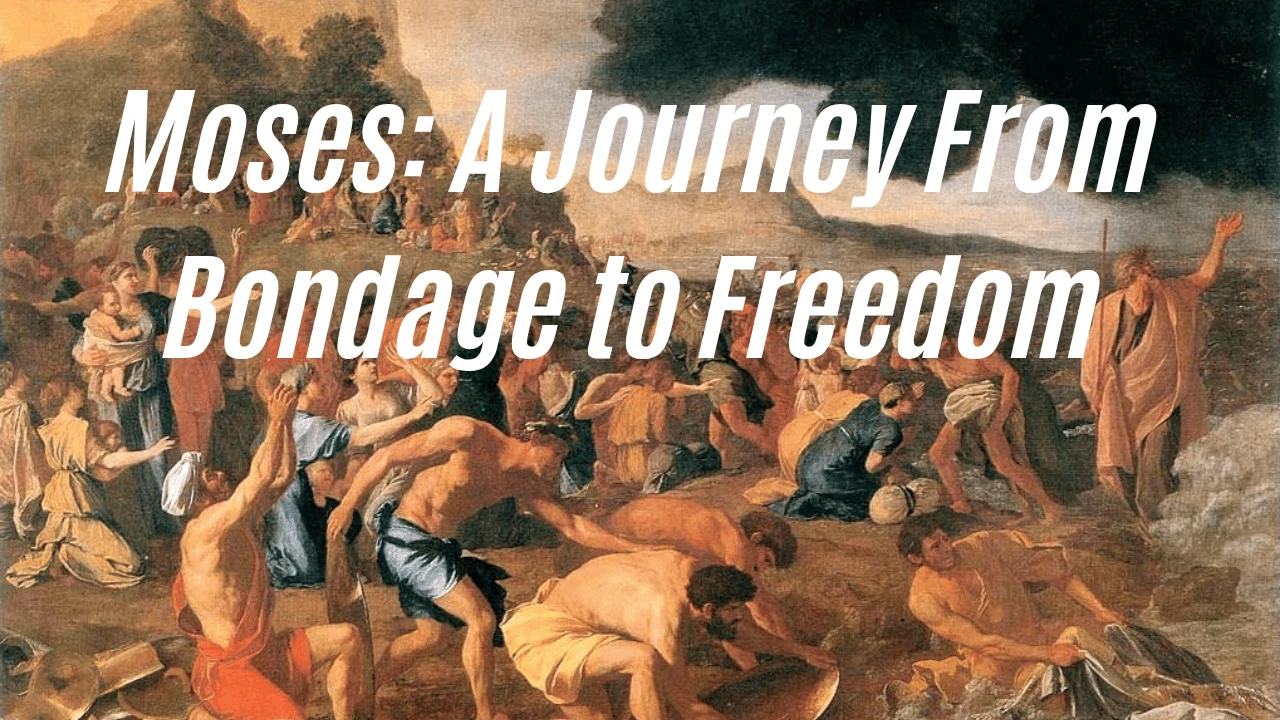
• God prepares us in the wilderness: Saved from death as a baby and raised in Egypt’s royalty, Moses fled to the desert of Midian after attempting to force deliverance in his own strength. In the quiet of the wilderness, God transformed a proud prince into a humble shepherd, proving that God's timing and character development always precede His calling.
• God’s strength is perfect in weakness: At the burning bush, Moses made excuses about his inadequacies. Yet, God’s response was simple: "I will be with you."
• God's Faithfulness outlasts the struggle: Moses faithfully led a stubborn, wandering nation, anchoring his soul in deep intimacy with God. Though his own human frustration kept him from entering the physical Promised Land, his true reward was the face-to-face relationship he shared with the Creator.
Moses’ legacy reminds us that God does not call the equipped; He equips the called.