Series: Moses: A Journey From Bondage to Freedom
Fear Not, Stand Firm, See
October 18, 2026 | Peter Rowan
Passage: Exodus 14:5-14
Summary
Most of us know the story of Moses and the parting of the Red Sea, but familiarity can cause us to miss what it is still saying today. In Exodus 14, both Pharaoh and the Israelites were trapped between regret about the past and anxiety about the future. Moses offered a different path with three simple invitations: do not fear, stand firm, and see. These phrases are not just ancient words of comfort. They are calls to faith, hope, and love in the present moment. Fear distorts our memory and clouds our vision, but God invites us into something better. He is the God who makes a way where there is no way, and He is still doing that today.
Transcript
Now, Lord, may the words of my mouth and the meditations of our hearts be pleasing in your sight, O Lord, our rock and our redeemer. Amen. All right, so this fall, if you've been around Second City or if you haven't, I'll tell you what we're doing. We're looking at the Book of Exodus, really through the life of Moses. Moses life kind of follows at least the narratives of the Book of Exodus.
When you get to the second half of the Book of Exodus, there's not a lot of narratives. A lot of it's instructions about the tabernacle and things like that. Looking at the life of Moses, and when you. When you look at the life of Moses, a lot of the stories are very familiar, right? Of course, Israel's down in slavery in Egypt.
Moses's mom makes the basket, puts him in the Nile River. Pharaoh's daughter finds him. Those kinds of stories. Maybe you remember the story of Moses actually killing an Egyptian, and then some of the Israelites being like, hey, who gave you the right to be ruler over us? And he flees and becomes a shepherd, and God shows up as a burning bush, and he sends him back to the place that he fled from.
So all the plagues, you know, all that sort of stuff, they're very familiar stories. And I think sometimes it's good to sit in familiarity, but it's kind of hard because it becomes in some ways overly familiar. And. But there's lots of good reasons to study the life of Moses and this story. One is because it's the great sort of redemption story in the Old Testament.
If you want the story of redemption, it's the Passover in the Exodus in the Old Testament that are pointing us forward to the reality of what God has done for us in Christ. But the other thing is that Moses is this huge figure, an enormous figure. Moses has mentioned. I said this in the very first sermon in this series, you know, a while ago, long enough ago that maybe none of you remember that Moses mentioned in the New Testament 80 times more than David, more than Abraham, second only to Jesus. Moses is mentioned by name, second only to Jesus in the New Testament.
Kind of remarkable. But, you know, as influential and as well known as these stories are, I think what we do sometimes with these stories is we think, okay, I know them, so I don't really have to engage with it too much because I already know it. Or we sometimes think, ah, they're so old, how can they have any relevance for me? Right? And so part of my intent in this series is to say this is just as alive.
It's just as alive today as it was then.
And the fact is that we don't, we don't live in fear of Pharaoh. None of you young mothers have thought about making a basket and putting it in the Susquehanna, right? That's not something that is on our minds. And yet these texts still speak to us, right? We don't slaughter the lamb and put it over the lintel and the doorposts, but we need to be under the lamb of God and his blood for us, right?
It's just as relevant.
It speaks to us just as much. So today we're at this story of the parting of the Red Sea. We actually didn't read the Parting of the Red Sea. We're actually looking at the part before that. And I want to say again, I think this text is just as relevant.
So this Thursday, Melissa and I went to Messiah.
Who are Messiah students here? All right, so we went to your place. You're at our place here. We went to your place. We went and we heard Kurt Thompson speak as part of the new president's inauguration.
Sort of stuff. Kurt Thompson is a Christian psychologist. He's written quite a few well known books. The Soul of Shame, the Soul of Desire, Anatomy of the Soul. These books, maybe some of you have read them.
And we didn't get there on time. We walked in about five minutes late. So I'm not really sure what the first part of his talk was about. But as soon as we walked in, he said, everybody is living on two tracks. Everybody's living their lives on two tracks.
And the challenge is to get from track one to track two. Were any of you students there? Oh, you know what? You could have got a chapel credit, I heard. And you missed a good lecture.
But he says, here's what, here's the thing. It's that we live on track one. And track one is living in the past and in the future. And for the most part, it's living in fear of the past and anxiety of the future. Wondering if our past is going to haunt us.
Or maybe we're overly romanticizing it. We're just living in nostalgia. We're just constantly thinking of what went good or what went bad before us. And we're constantly living in front, mostly anxious about where we might lead, where we might go. Maybe the past is going to come to haunt us in the future.
We're just living in this kind of past future dynamic, worried, filled with anxiety. Are our lives going to turn out? Do we make the wrong Decision, where is it going to lead us all that I'm going to get to track two. But this idea of living in the past and the future, and I think that is actually remarkably present in our passage. I didn't want to bring all the pew Bibles out here, and I see y' all don't have your Bibles open.
That's fine. But hopefully you were very attentive when Norah read for us. What I want to want you. Want you to see first is how Pharaoh lives in the past. He's an example of living in the past, right?
So right at the very beginning of the passage, you open it up. When the king of Egypt was told that the people had fled, which he, you know, he told him, leave, get out of here. But when he told. When he was told that they actually fled, the mind of Pharaoh and his servants was changed toward the people. And he said, what is this we've done?
Right? He's thinking, he's living in the past. What did we do that we have let Israel go from serving us? And you can kind of understand, it's not that you're regretting letting slaves leave, but you can understand. He's like, this is going to change our life.
He's just thinking about the past, and now he's worried about the future. What have we done now? We're missing out on something in the future, right? And so what's one of the inclinations when we're on this track? One, and we're worrying about the past, we're worrying that we've made a bad decision in the past.
Anxious about the future. Well, we're going to fight, right? We're going to fight. And that's exactly what he does, right? That's what he does.
He gets all of his chariots and his servants. Chariots, it says 600 of his horses and chariots. And then it says. I forget exactly what it says.
Let me find this quickly. Yep. And all the other chariots in Egypt, he's like, oh, we're gonna fight. I'm worried about the future. I can't believe I did that in the past.
And I'm gonna make certain that things turn out how I want them. I'm gonna fight for it. So he fights, he looks back, and he readies himself to take control. So verse 8 says, he pursued them. He pursues Israel.
Verse 9 says, and the Egyptians pursued them. And that's, of course, one of the things that we do when we're on track. We're going to fight. We are going to make sure that this turns out like we want it to turn out.
But here's an interesting thing. It's not just Pharaoh that's living on track one. The Israelites are turning living on track one also.
So verse 10, When Pharaoh drew near the people of Israel, lifted up their eyes, which has got to be one of the scariest things to see. Lifted up their eyes and behold, the Egyptians were marching after them and they feared greatly.
And what they do automatically, I'm going to get to this. What they said, but what we know is quickly. And they actually repeat this later on, but quickly they say, we should never have left. Why do we leave? Which is to say they're looking back right away, right?
This is actually what they said, verses 11 and 12.
Is it because there are no graves in Egypt that you've taken us away to die in the wilderness? What have you done to bring us and bring us out of Egypt? Is not this what we said to you in Egypt? Leave us alone that we may serve the Egyptians, for it would have been better for us to serve the Egyptians than to die in the wilderness.
Did you notice how many times it mentions Egypt? They're already just having left. They're looking with an absurd nostalgia to the slave days.
Oh, why would you take us out of that? Goodness, what are they thinking?
The truth is that they're stuck on this track one, right? They're looking at their future, and so now they're obsessed about their past. Pharaoh was looking at his past and so now he's obsessed about his future. They're looking at their future now they're obsessed about their past. Oh, man, this is a fearful thing.
Egypt was so nice.
Did you hear what they said? Is this not what we said to you when we were in Egypt? Leave us alone that we may serve the Egyptians. They never said that. There's no record of them saying that.
There's no way they would have said that. What was happening to them? I mean, what we learn from the very beginning is that they're constantly oppressed. Their baby boys are being told to be slaughtered, being thrown into the Nile. They're having their straw taken away, so they have to make bricks without straw.
Now they're saying, oh, didn't we tell you to leave us alone because we wanted to serve the Egyptians? It's absurd. But this is what we so often do in this track one experience.
So.
What we're seeing them do, in some ways, what I want to say is, what we're seeing them do is the very opposite of what we see Pharaoh do. Because the option on track one is not just to fight, but what is the option, often is to flee. Just get us out of this place and bring us back, right? And so we do this fight, flee kind of dynamic. They're fearful of the future.
And so they say, let's just check out. Let's go back now. I'm going to say this because I think it's important most of us learn to fight and to flee. Or, y' all know, probably the other one, right? To freeze out of survival.
We learn these instinctively kind of survival mechanisms. How do we get forward in life when things are so bad, when we actually are legitimately living in fear and they are legitimately living in fear, right? I mean, Pharaoh has his 600 horsemen and chariots, and then all of Egypt is along with him, with all theirs. It's a legitimately fearful thing. It's a legitimate, fearful thing.
In fact, we know that from archaeological studies that chariots and horsemen were kind of used as early as 1600 BC in Egypt. And it was used to destroy the. I forget what the. I wrote it down. The Hyksos, they were these enemies of Egypt.
And you know what? Who won? Egypt won. Who was living in Egypt around 1600 when that happened? The Israelites.
These events, most people date them to around 1450 ish bc so the development of the chariots for war in Egypt, which is the first place they were developed for war, happened when the Israelites were living there. Did they have reason to say, we better flee?
Yes, they did. Right. And we have lots of reasons to do that. Right? We have reasons to want to fight or to flee.
It's not without reason that we do this. So Kurt Thompson, the other night was saying that he was born just a few days after his older brother moved to college. And so the first picture of him and his mom, he says, his mom just looks like an anxious wreck. And that's totally understandable. But he lived, he was born into and nurtured in this sort of anxious system from the earliest time because his mom did not expect to have a baby when she was 44 and her child was leaving to go off to college.
That's understandable. Dynamic. But he's saying that there's another option. Let me see if I can turn my page here with my cold hands.
What I'm saying, and what I think is important to say is that there are reasons why we live on these tracks. On this track one, you know, maybe you work really hard and you're really, really worried about the future because you saw your dad go from job to job to job to job. And that's understandable, right? So you fight and fight and fight to get, you know, the best grades so you can get the best jobs. So hopefully you can have some form of stability.
That's like. That's an understandable thing. You know, maybe your. Maybe your parents were far from the. From a dynamic of intimate love that you desired to see in them.
And so relationships are just legitimately something that you flee from. You know, somebody gets close to you and you're like, I don't trust that kind of closeness because I've not seen it go well. Like, there's a. There's a reasonableness to this kind of interaction, this fighting and fleeing and freezing. But here's the interesting thing.
I think most of us know that's actually not how we're meant to be. That we almost have this instinctiveness inside of us that says we were made for a peace. What the Bible says, shalom. Like a peace that passes in some ways our understanding. But it's deep down inside of us that we desire.
And we have this sense that we were made for it, that we could enter into the world in the present with a hopefulness for the future, with an understanding of the past, but actually a hopeful living into the present.
And so I think we have this desire, and I want you to see something that Moses says to the people there when they're filled with fear, I think gives us actually the proper invitation into what Kurt Thompson said is track two, which is life in the present with God. Okay? So living in the present is track two.
Our stories and the stories of our life, what I'm saying often put us on track one, just like it does for the Israelites. But what I'm suggesting to you is that the gospel, the good news of Jesus and God with us in the present. God with us. He says he's never going to leave us. He's never going to forsake us.
Gives us faith, hope and love to actually enter into a present reality, not just being worried about the past or anxious about the future, but able to actually live into the present. Okay, what this doesn't mean is that living in track two means you're totally off of track one all the time. Okay? This is something that was important that he said. You cannot live well in the present without understanding the past.
Okay? You can't live well into your present without understanding your past. I think that's totally true. Think about even what we do in our Worship service. We confess our sins, we reflect on the week, we lay it before the Lord and say, we desire faith, hope, and love now in the present, because we've reflected and we've left it to you, right?
In fact, the other night, one thing he said is, it's to the degree that we make sense of the past that we can live rightly in the present.
So what Moses doesn't tell the people there is. You never said that. You never said, leave us alone, that we can serve the Egyptians. Which is, I think, what I would be tempted to say. You know, you're dealing with all these people, and you've finally got them out, and now they're grumbling already.
Or maybe, I mean, you know, Moses does get to the point where he talks to God and he's like, why did I take these people out? But I would think maybe right there at the very beginning, maybe Moses would be like, come on, guys, you don't want to die back in Egypt. But that's not what he says. It's not what he says to him.
He actually doesn't say.
He doesn't say, you have no reason to fear. What he does say is, do not fear.
He doesn't say, you have no reason to fear. He says, don't fear.
And I want to suggest that that in itself is an invitation to faith, because faith is not being certain of what's happening, but it is being sure of who has the future, Right? It's not saying, I know the future. It's being sure of who has the future. So it's not, you have no reason to fear. It's don't fear because God is with you.
So that is the first thing that I think Moses says to them is faith. Have faith. Do not fear.
What he doesn't say, therefore, is fight. Right? But what he also doesn't say is freeze. Right? You guys probably know that the survival mechanism kind of beyond fight and flee is freeze.
Our bodies actually shut down. That's why so many traumatic experiences are actually hard to remember, because your body's actually shut down.
But what Moses doesn't tell them is, hey, just stay here. Freeze. What he actually tells them instead is, do not fear. Does anyone remember the second thing he says? Stand firm.
That is totally different than freeze. Stand firm is like an active standing, you know, stand ready.
Stand like something's going to happen. Stand firm. Stand your ground. It's an active standing, which I want to suggest to you is an invitation to hope. Freeze.
That's living out of fear. Standing firm. Is an invitation to hope. So do not fear. Is an invitation to faith.
Stand firm. Is an invitation to hope. So Moses said to the people, verse 13, fear not, stand firm and see the salvation of the Lord, which he will work today for. The Egyptians, whom you see today, you shall never see again. The Lord will fight for you.
You have only to be silent. So Moses words are, fear not, stand firm. See? And he actually says, see, see, see. He repeats it three times.
That word, the Hebrew word is Ra. And that word has actually already been used a few times in Exodus. One time that we looked at earlier is in chapter two, verse 25. You guys remember? Actually, kids, I think you guys were memorizing this verse.
Chapter 2, verse 25, it says, God saw the people of Israel, and God knew y'. All. This is one of our church memory verses. I'm actually reading it off my text, too. But God saw the people, which is that word, God rod them, right?
We already saw that God is seeing them. Then the next time that we see that word Ra is when Moses is a shepherd and he's up on that mountain, Mount Horeb, which we also know as Mount Sinai, right? And he sees. He turns and he sees the burning bush. So the first time we see it is God seeing, which is to say, God seeing in love the plight of the people of Israel.
The second time is Moses seeing also God's love of his presence and his knowledge of God's people. And then he's going to send Moses back.
So what do we see in the. What do we understand out of that pass, out of those two passages is we learn the love of God in this seeing.
So again, I'm suggesting that this actually, what we have right here is faith, hope, and love.
Do not fear faith.
Stand firm. Hope. See, at least in the context of these other passages in Exodus. See, my love, Love.
And think of this. Pharaoh wanted to take away the agency of the Israelites. That's what we talked about in our staff meeting this week. He wanted them to do his bidding.
And they actually here, in some ways, wanted to demand their own agency. We should have actually. You should have listened to us, Moses, when we said, leave us alone. Why don't we go back?
But neither of these things, neither of these things come out of living on track two. This living with faith, hope, and love in the present. And neither of those things bring us to the place which we long for, which is the place of peace, which is the place of shalom.
And interestingly, what I think, Moses invites the Israelites to is what I want to call passive agency, which I understand sounds like an oxymoron, but let me suggest to you that you use oxymorons anyway. Bittersweet jumbo shrimp.
A passive agency. What God wants them to see is that he will do it and he wants them to be engaged with it. Don't fear, stand firm. See, these are all things that he wants them to do. But what are they ultimately doing?
They're just saying, lord, I am falling on you, I am full of fear. And yet I can be present here in the now to a degree with the peace that passes understanding, the peace of God because of the faith, hope and love that you give me. I can actually engage with the present, looking into the future with faith and hope and love. Because largely you're calling me to an active true agency that is ultimately passive to your great care, which is ultimate. And so what do we see that happens in the passage?
Well, God does what of course nobody can do. He parts to see. He brings them through where there was no way, where the only options were fight doomsday, flee doomsday, where the future only only ever possibly looked bleak. And so the present was just full of fear. Instead, the invitation was, do not fear, stand firm.
See faith, hope, love.
Let me pray for us. Lord, thank you for familiar passages, chariots and riders that are thrown into the sea, the ways that you care for your people. God, I pray that we in our present lives would live with you, that you would do a great work and so that we could not be anxious about tomorrow. It'll have its own cares and you will be with us in them, Lord, and that we would hear your invitation even in our lives right now to not fear, to stand firm and to see you work. God, thank you for your word this morning.
Thank you for the beauty of this place. We give you praise and thanks in Jesus name. Amen. Why don't you stand and we'll recite the faith of the church together using the Apostles Creed. And y', all, I.
Series Information
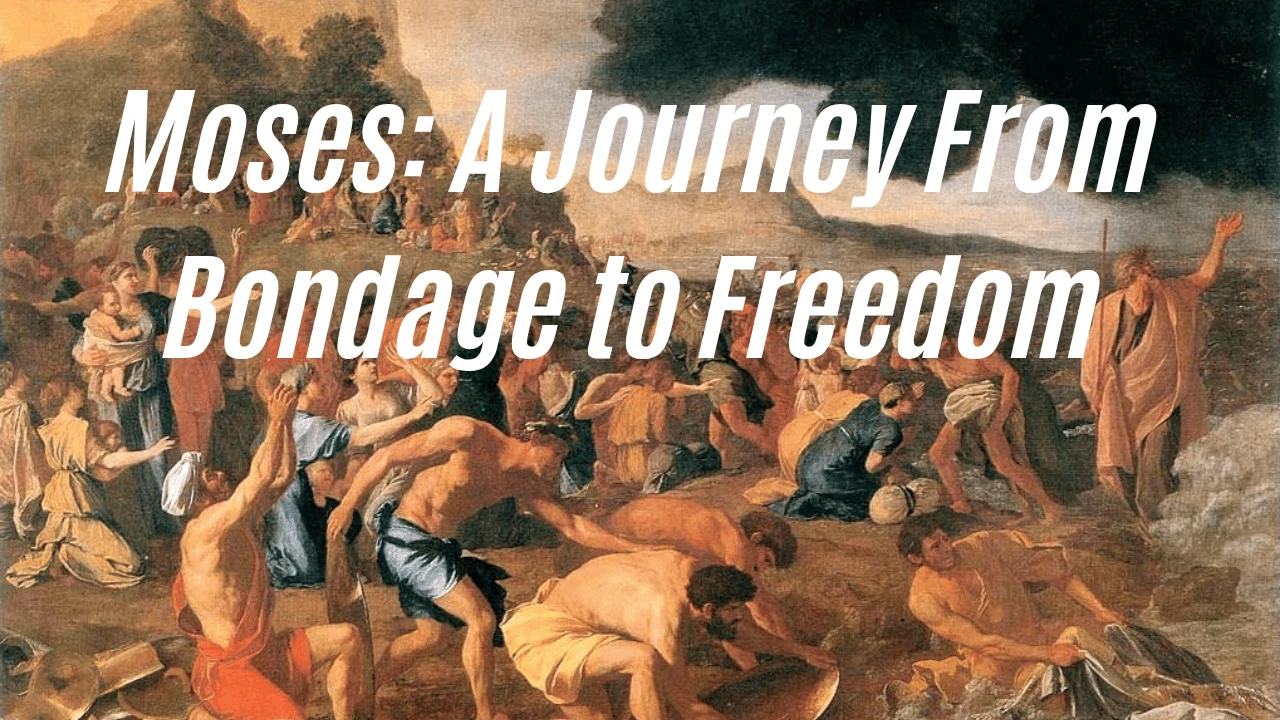
• God prepares us in the wilderness: Saved from death as a baby and raised in Egypt’s royalty, Moses fled to the desert of Midian after attempting to force deliverance in his own strength. In the quiet of the wilderness, God transformed a proud prince into a humble shepherd, proving that God's timing and character development always precede His calling.
• God’s strength is perfect in weakness: At the burning bush, Moses made excuses about his inadequacies. Yet, God’s response was simple: "I will be with you."
• God's Faithfulness outlasts the struggle: Moses faithfully led a stubborn, wandering nation, anchoring his soul in deep intimacy with God. Though his own human frustration kept him from entering the physical Promised Land, his true reward was the face-to-face relationship he shared with the Creator.
Moses’ legacy reminds us that God does not call the equipped; He equips the called.